

Previously on Goodnight Tango
In my last post, I ended with a question that can make someone pause:
Why struggle to improve at all?
We believe that in Tango, as in many other activities, the higher you get, the lonelier it becomes. The better you dance, the fewer people you find to truly enjoy dancing with.
So if improving means that fewer and fewer partners satisfy you…
if you need those very few at “your level” to enjoy a tanda…
What exactly are we climbing for?
The Hidden Assumption
Behind the idea that “the top is lonely” there is an assumption we rarely question:
That the top means superiority.
That getting better means separating.
That improvement naturally narrows your circle.
But what if loneliness is not the result of height… but the result of how we define the summit?
The Path to the Top
If you’ve read the previous posts, you already know there are different ways to grow.
At the extremes (and of course, there is a whole spectrum in between), growth can be Personal or Relational.
If your goal is primarily your own enjoyment, and your partner must meet your standards for you to enjoy the dance, then yes, the higher you climb, the fewer people you will find.
And something else happens, too.
The higher you climb, the less willing you may be to descend. You resist dancing with those you once danced with. People you met on your way up become part of the past. You crossed paths. You moved on.
Were they just bystanders?
That depends on the mountain you chose.
A Different Way to Climb
There is another way to grow.
Relational growth does not see improvement as distance from others, but as increased responsibility toward them.
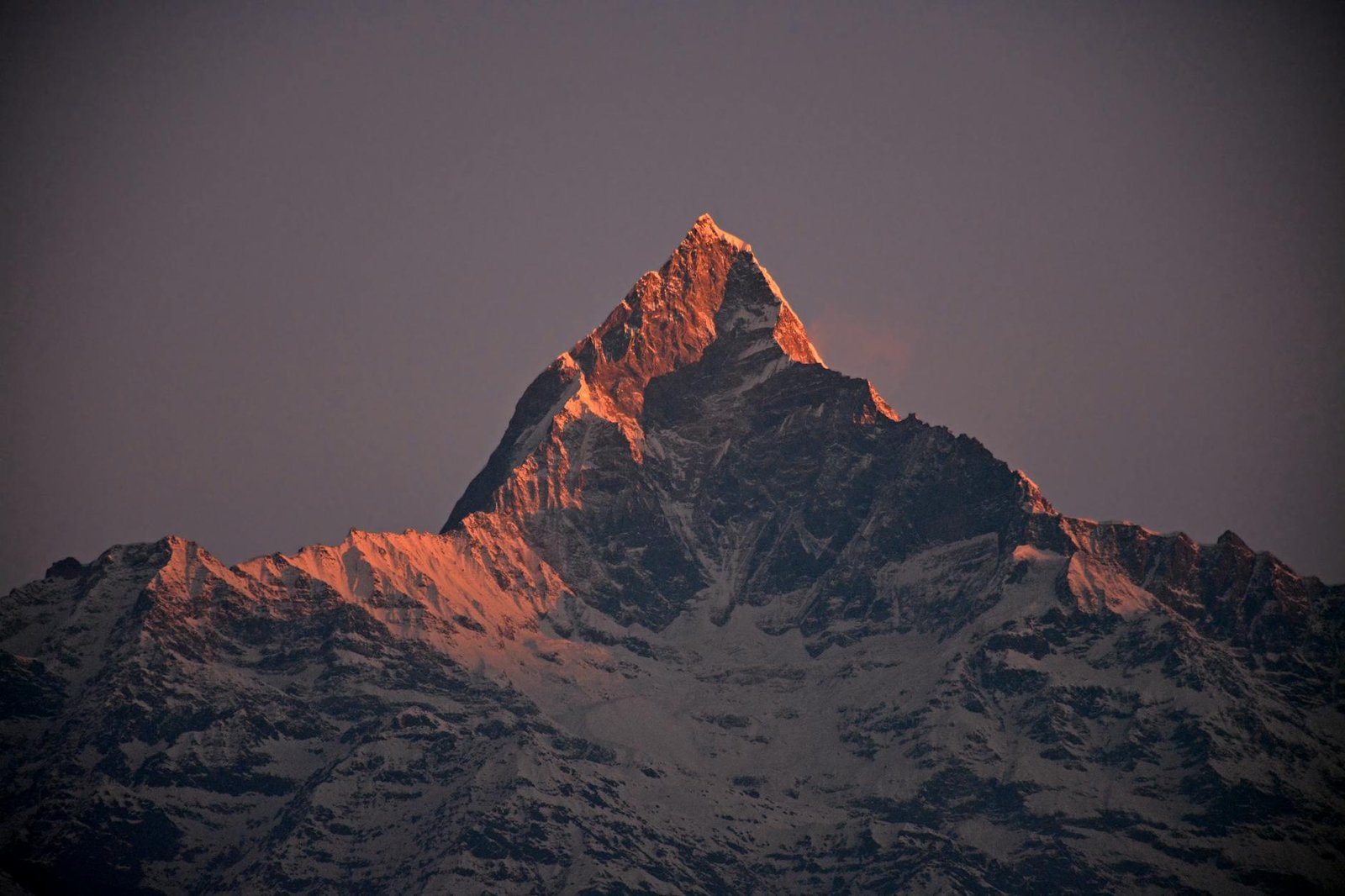
Think of a group of climbers connected by ropes. When one slips, the others hold. When one advances, the rope remains attached. No one cuts it to stand alone at the peak. Even the one who reaches the highest point is still connected to the rest. Their achievement is not isolated. It is supported. Secured. Shared.
If you reach your top relationally, you didn’t get there alone. You were held on your way up. And now you have the strength to hold others.
In that case, the top is not a place of separation. It is a place of connection.
So maybe the question is not whether the top is lonely. Maybe the question is:
What kind of top are you trying to reach?
Which Mountain Are You Climbing?
Success in Tango can be measured in many ways.
For some, success means dancing with advanced dancers, teachers, or visiting maestros. The invitation from across the room. The nod of recognition from someone whose dancing you admire. For others, it means performing, competing, mastering complex vocabulary… the satisfaction of executing something difficult, cleanly, in front of others.
But for many, perhaps more than we acknowledge, success simply means being a wonderful social dancer. The person who makes their partner feel safe, seen, and free to express themselves. The one whose embrace people remember long after they’ve forgotten the steps.
These are not the same mountain. And none of them is wrong.
The problem begins when we measure ourselves with someone else’s metric. If your goal is to be a great social dancer, ask yourself honestly: does it matter whether you can execute 100 figures?
It might… if those figures genuinely serve the connection between you and your partner. But often they don’t. Often they serve something else: the image we want to project, the level we want to signal, the validation we are quietly seeking.
So before you measure your progress, ask yourself two things. What summit are you aiming for? And what should your growth actually look like in the mountain you climb?
Because maybe… just maybe… you are measuring yourself with the wrong ruler.
How Can You Tell?
On the dance floor, the difference between personal and relational growth is not only felt by the partner.
It is felt by the room. Some dancers make others smaller… increase anxiety around them… narrow the expressive range. Others increase safety around them… expand expressive possibilities… make imperfection workable.
This has little to do with the complexity of their steps. It has everything to do with their presence.
If you have climbed far and it feels lonely when you enter the milonga, pause for a moment and think.
When you walk into the room:
Do faces lighten?
Or do they tighten?
Does your presence expand the atmosphere?
Or does it contract it?
If it feels lonely, perhaps it is not because you climbed too high.
Perhaps it is because you climbed a mountain built on separation.
Out of the Dance Floor
But here’s what’s worth pausing on. Everything we just described… regulating under mismatch, adapting without dominating, staying connected without collapsing… these aren’t just dancing skills.
They show up everywhere… in how we work, how we argue, how we love. And yet the world outside the milonga rarely rewards them.
It rewards performance. Output. Results. So if presence doesn’t pay… why develop it at all?
That’s the question for next time.
Tonight’s Goodnight Tango
Tonight’s Goodnight Tango is “Soledad” by Astor Piazzolla. Soledad means loneliness, and the music captures the feeling of loneliness quite accurately. The same feeling that this post started with. The same feeling that as you reach higher might not be a reward… but rather a warning.
Comment below or join the discussion in the community
Need to talk privately? Contact me personally.
Or… just spread the word!
Leave a Reply