Before you start… just a quick note.
This is the third post in a longer series
The arguments unfold over time and are interconnected.
Subscribing by email lets you follow it as intended.
A dream come true
Have you ever thought you could have a tango event with perfect role balance and a ratio between men and women reaching close to 70% women and 30% men?
That would have felt like a dream to organisers not long ago. Today, it is a possibility. In some communities, it might already be a reality.
And we all seem to be happy with it. But… should we really be?
The double role solution
The double role solution didn’t arrive accidentally. It was pioneered by teachers and communities who understood that the role imbalance problem needed a structural answer, not just a cultural one. And it worked. It works on more levels than one.
Pedagogically, it produces better dancers. A leader who has followed understands the embrace from the inside. A follower who has led understands what the other person is trying to communicate. The embodied knowledge that used to take years of observation and inference is now built directly into the learning process. I’ll be honest. When I see dancers who learned both roles from the beginning, I often wish I had followed the same path. There is a fluency in how they move and how they listen that I am still working toward after almost ten years.
Socially, it has done something equally important. The idea that two women or two men dancing together is somehow inappropriate, a prejudice that kept many dancers away from tango and made many others feel unwelcome, is weakening. Not gone. There is still work to do. But the path is being paved, and the direction is clear. Same sex dancing is becoming unremarkable in most communities. That is genuinely good for tango and genuinely good for the people in it.
And yet.
Role balance and gender balance are not the same thing. We solved one. Did we stop noticing the other?
When the room speaks
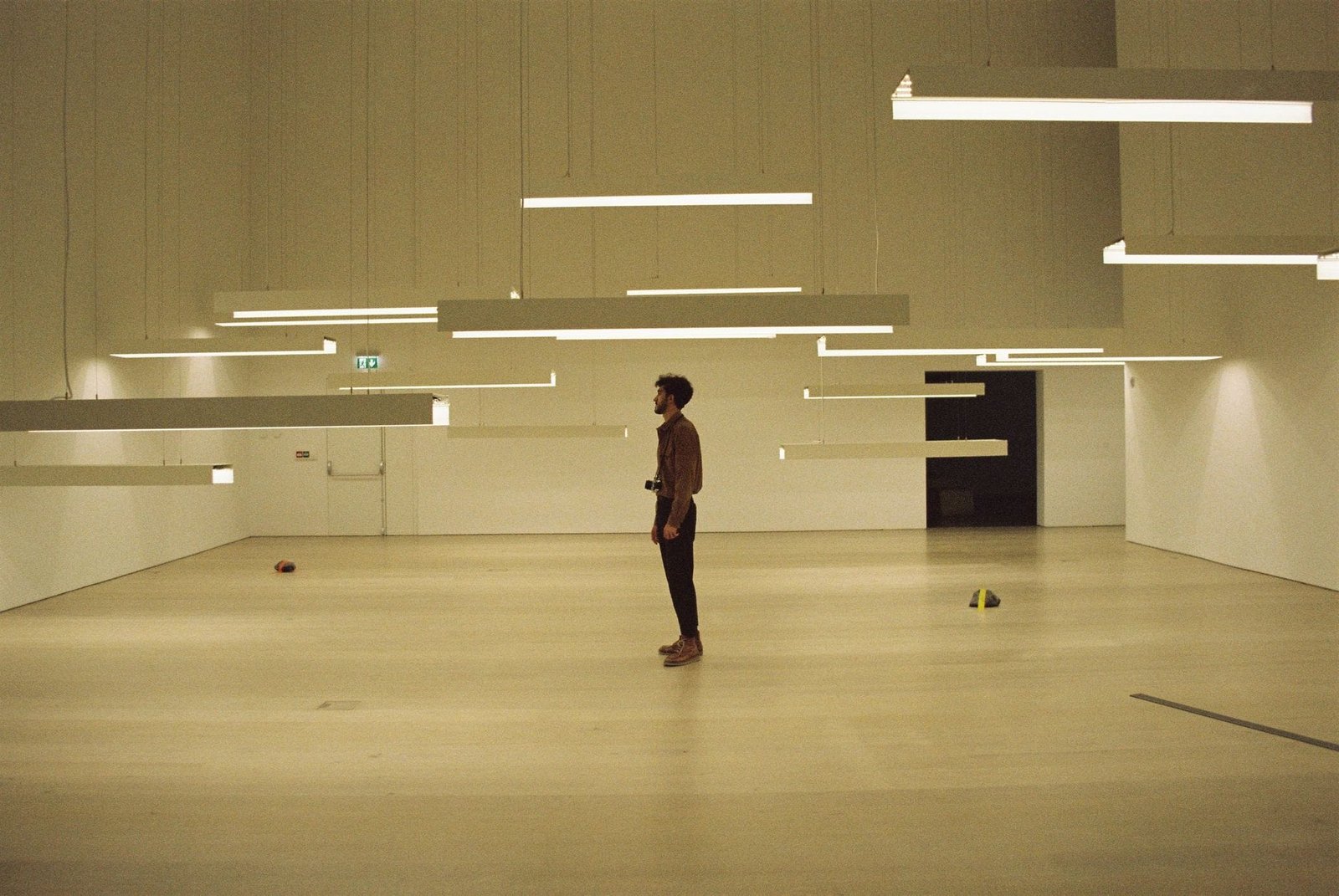
Think about what it feels like to walk into a room where you are outnumbered three to one. Not because anyone has told you that you don’t belong. Not because anyone has been unwelcoming. Just because of what the room looks like when you walk through the door.
We know this feeling in tango. Female leaders have been describing it for years… the experience of being in a room that wasn’t built with you in mind, where the formal structures don’t quite work for you, where you have to find workarounds just to be seen. That experience is real, and it has been taken seriously.
Now imagine you are a man walking into a beginner class for the first time. You don’t know anyone. You have no social network inside the community yet. You are uncertain whether tango is for you. And the room is 70% women.
Nobody says anything. Nobody needs to. The room says it for them.
This is not the same as the external cultural barrier that makes men less likely to try tango in the first place… the one that leads people to say attracting men is a cultural problem, too big for any single community to solve. That barrier is real, and it exists before the man ever finds a tango class. But what happens when he does find one is within our control. And right now, what happens is that the internal signal of the room confirms whatever hesitation he already had.
We are not reducing the barrier. We may be reinforcing it.
The double role solution was designed in part to dismantle gender stereotypes. And it has. But in doing so, it removed the instrumental reason to care about gender balance. If everyone dances both roles, the room always functions. The classes always work. The milonga always has partners available. The problem of gender imbalance becomes invisible because its functional consequences have been solved.
But the cultural signal remains. And nobody is measuring it.
Is Tango dying?
There is a conversation happening in tango communities everywhere. At festivals, in committee rooms, in comment sections, over coffee after milongas. The conversation goes like this: Tango is dying. Attendance is down. Communities are shrinking. The average age of dancers is rising. Young people aren’t coming. The golden generation that discovered tango in the nineties and two thousands is getting older, and there is nobody behind them in the numbers that would be needed to replace them.
The conversation is real. The anxiety behind it is justified. Daniele Donzello has mapped the structural collapse of local pipelines and the fragmentation of a scene that once grew almost by itself. Eduard Koller has reframed it as a broken funnel, pointing out that roughly 10-15% of beginners survive their first year, a retention rate that would kill any other product. Daniel De Kay has named the human cost quietly and precisely: communities that stop welcoming newcomers eventually become a small circle of familiar faces growing older together. That is not a community. That is a slow goodbye.
All three are onto something real. But there is one question that is largely absent from all of it.
The conversation talks about marketing. About making milongas more accessible. About the cost of classes, the intimidation of the embrace, and the years it takes to become a social dancer. It talks about competing with other dance forms, with other leisure activities, and with the general decline of partner dancing as a cultural practice.
What it rarely asks is whether the internal conditions of tango communities are making the problem worse. Whether the solution we found for the role imbalance… genuinely effective, genuinely progressive… has quietly created a space that is increasingly difficult for the one demographic tango has always been most dependent on to enter and stay in.
Men are not coming to tango in the numbers they used to. The men who do come are leaving earlier than they used to. The communities that are celebrating role balance and progressive pedagogy and the dismantling of gender stereotypes are doing so in rooms that are slowly, quietly, becoming less and less hospitable to the people whose presence the whole ecosystem still depends on.
Nobody designed this. Nobody intended it. It is what happens when you solve the visible problem and stop looking for the invisible one.
💥Is Tango relevant today?💥
This is what my new series of videos explores.
Watch it here.
Do we want to function or to thrive?
There is a version of the future where this resolves itself. Where communities notice the signal the room is sending and decide to do something about it. Where the energy that went into empowering female leaders gets matched by an equal energy directed at the question nobody is asking. Where the double role solution becomes the beginning of a larger conversation rather than the end of one.
That version is still possible. But it requires someone to look at a room that is functioning perfectly… with balanced roles, full classes, running milongas… and ask whether functioning and thriving are the same thing.
Because a room can be full and still be shrinking.
There is also something quietly contradictory in the assumption that underlies all of this. The people who champion the double role solution will also tell you that people still come to tango to meet, to connect, to form relationships with someone of the opposite gender. That the heterosexual couple at the heart of the embrace is not a relic but a draw. Which means we know both genders are needed. We just seem to be leaving that need to sort itself out.
This is especially true for the younger dancers tango needs most urgently to attract. The twenty or thirty-year-old person walking through the door for the first time is not just looking for a dance. They are looking for a social world. One that includes the possibility of connection with the opposite gender. A room that is 70% women doesn’t just send a signal about role balance. It sends a signal about what kind of social world this is. And whether there is a place in it for them.
A vicious cycle
If you ask me… I don’t think it will just sort itself out. Because, as a man, in such a room, you have two urges fighting within you. One is telling you that as a man in a room full of women, you are a lucky guy. But the other is secretly whispering that you don’t belong there. At some point the signal the room sends stops being a subtle discomfort and becomes a self-reinforcing cycle. Fewer men come. The women who came partly for the possibility of connection with men find less of it. Some of them leave. The room shifts further. And the cycle continues… quietly, without anybody noticing, one milonga at a time.
And the problem doesn’t stop at men. Female leaders who broke through every barrier to earn their place on the floor often find themselves experiencing a different kind of invisibility… not of being unseen, but of being a second choice. Many followers dance with them not out of genuine preference but because the alternative is sitting. Being an alternative… a second option… is also making it more difficult for female leaders to continue pushing. In some strange way, the female leaders who were supposed to push the competition and motivate male ones to improve also depend on their presence in the room.
That is the version of the future nobody is modelling. And it begins in a room that looks, from the outside, perfectly balanced and perfectly well functioning.
The communities that are growing older and smaller are not failing because they have stopped caring. They are failing because they stopped asking. Because the questions that don’t have clean answers are the ones that get quietly set aside in favour of the questions that do.
We found an answer. It was a good one. It solved real problems for real people, and it changed tango in ways that are genuinely worth celebrating.
But it didn’t answer everything. And the thing it didn’t answer… why aren’t more men walking through the door, and what is the room telling them when they do… is definitely one of the questions that will determine whether tango is still alive in twenty years.
Not the answer. Just the question.
Because you cannot solve what you refuse to name.
Before tonight’s Goodnight Tango… just a small thank-you.
The project is growing beyond the blog, with new videos, surveys, and a lively community.
Visiting the shop helps it stay ad-free and reader-supported
Tonight’s Goodnight Tango
Tonight’s Goodnight Tango is Farol, by Osvaldo Pugliese. Farol means lantern. A small light that illuminates what is immediately around it and leaves everything beyond its reach in shadow. Pugliese’s music here mourns quietly, persistently, without drama. Not the mourning of something suddenly lost. The mourning of something that has been disappearing so gradually that you only notice it when you look up and find the room has changed around you.
That is the room this post is about. Not the one that collapsed. The one that is still standing, still functioning, still looking from the outside like everything is fine. The one where the light is on, and the floor is full, and something is nevertheless, quietly… leaving.
Comment below or join the discussion in the community
Need to talk privately? Contact me personally.
Or… just spread the word!
Leave a Reply