

Before you start… just a quick note.
This is the third post in a longer series
The arguments unfold over time and are interconnected.
Subscribing by email lets you follow it as intended.
You can find the first post here.
And the second one here.
Previously on Goodnight Tango
The last post ended with a difficult question:
If the goal of my dance is my enjoyment, what does this make the other person?
Are they reduced to a variable in my pleasure… a means to my end?
This question echoes one of the most influential formulations of Immanuel Kant’s categorical imperative:
“Act in such a way that you treat humanity, whether in your own person or in that of another, always as an end and never merely as a means.”
The point is not that other people may never contribute to our goals. It is that their participation should not be instrumentalised… used in a way that is disconnected from their own agency, presence, and experience.
So if our enjoyment cannot be the direct end of our dance and our improvement, then what should be?
Relational improvement
If we take Kant seriously, the end of the dance cannot be my pleasure.
The reference point must be the relationship itself… the quality of interaction created between two people in that moment. This does not mean denying enjoyment or pretending it does not matter. Enjoyment still appears, but as a consequence, not as a goal.
When the relationship is the focus of attention, improvement changes meaning. It no longer promises better outcomes for me; it increases my capacity to take responsibility for what happens between us.
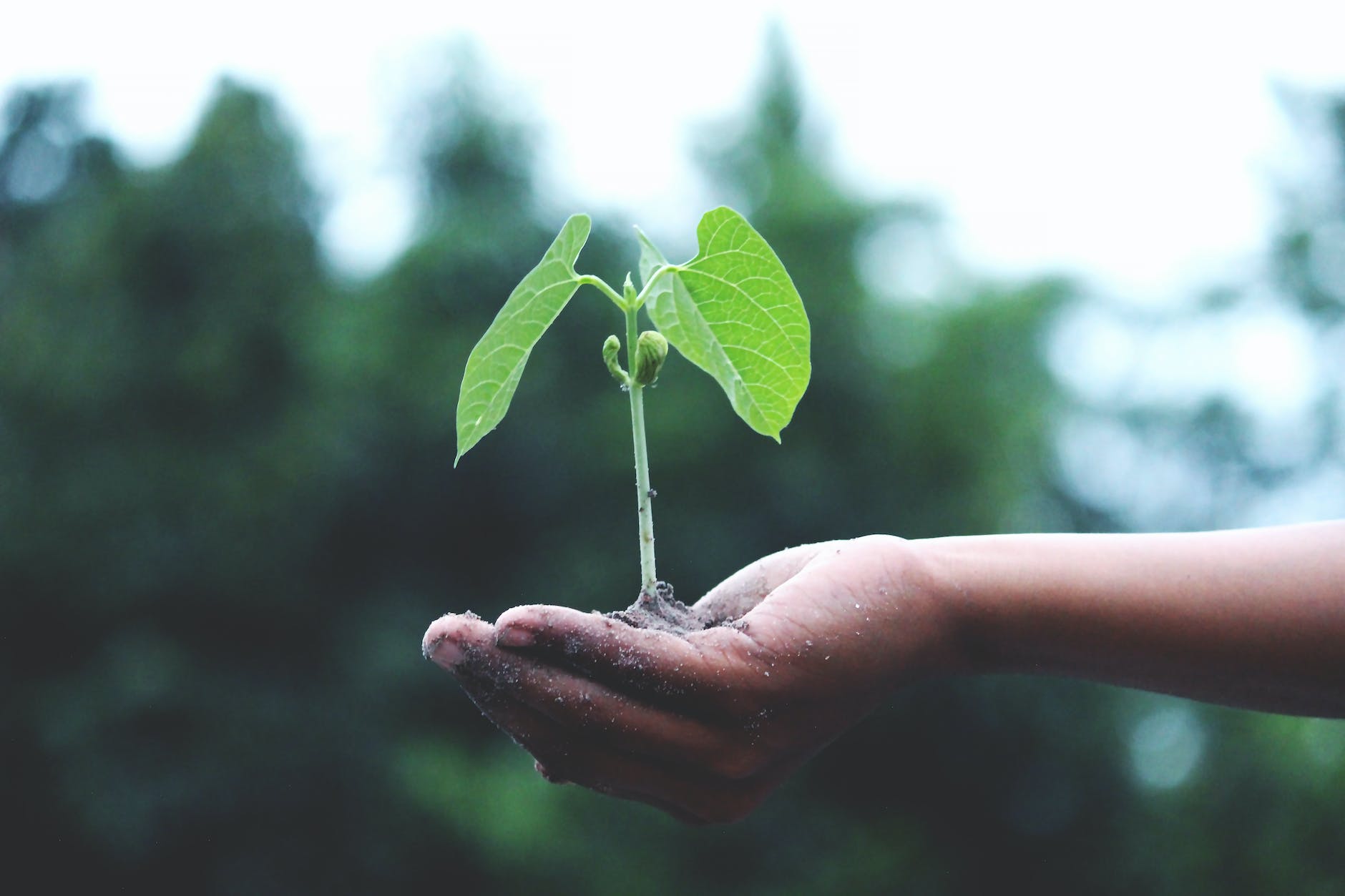
A tanda is like being handed a seed. You don’t choose it. You don’t know what it will grow into.
What you can do is plant it and take care of it. You can offer attention, patience, clarity, and respect. You can notice when something is fragile and simplify. You can protect the space so that something has a chance to grow.
Whether fruit appears or not is uncertain. And if it does, you don’t know whose favourite fruit it will be… yours, your partner’s, or something neither of you expected?
Skill and improvement do not give you the power to decide the fruit. They give you better tools to take care of the plant.
And that is the only thing that matters in the dance. In the relational improvement mindset, there is no goal in the dance. There is only one relationship to take care of. When you free yourself from a goal, you free yourself from any expectations, and that is changing radically how you see the dance.
💥In case you missed it💥
The Rejections in Tango survey results are out.
Watch them here before the next topic takes over.
Two mindsets of growth
The difference between personal and relational improvement is not subtle. It shows up clearly in how a dancer thinks and acts on the floor.
A dancer oriented toward personal growth tends to think in terms of extraction:
Is this dance good enough for me?
Can this partner support what I want to express?
Was this worth my time and effort?
Even when framed politely, the underlying logic is:
My improvement should secure me better experiences.
In this mindset, the partner becomes a constraint or a resource. When the dance works, credit goes inward. When it doesn’t, tension is exported, felt by the other person as pressure, confusion, or inadequacy.
The dance may be technically correct, musical, even impressive… and yet feel thin, brittle, or strangely empty.
A dancer oriented toward relational growth thinks differently:
What is possible between us right now?
What do I need to adjust so this interaction works?
Where should I simplify to keep the connection alive?
Here, the internal logic shifts:
My improvement increases my responsibility for the interaction, not my entitlement.
Skill becomes something I carry and use to make each interaction as good as possible. The more skills I have, the more responsible I am in managing them in the interaction. The more responsible I am…
for the clarity of the lead or follow I create.
for regulating tension rather than exporting it.
for adapting when something does not work.
for the emotional and physical safety of the shared space.
for not overwhelming the connection with unprocessed skill.
The dance may appear simpler or quieter… but it feels inhabited, coherent, and shared.
How to improve relationally
Relational growth asks different questions.
Instead of asking what a new skill gives you, ask what it allows you to hold:
- When does this skill serve the connection, and when should it be restrained?
- Does this make my partner feel safer, clearer, more present?
- Does it expand what is possible between us?
The ultimate test is the following question:
Would my partner still feel like a participant, or like a surface I am dancing on?
By contrast, when improvement drifts away from relational grounding, the questions sound different:
- Will this get me better partners?
- Why am I still dancing below my level?
- Did I enjoy this enough to justify it?
When these questions dominate, improvement has already shifted from responsibility to entitlement.
The biggest telltale sign
This difference becomes most visible in how tension is handled.
With a personal-growth orientation, tension leaks outward. When things don’t work, the partner feels it.
With a relational-growth orientation, tension is held inward. The dancer uses their skill to stabilise the interaction, not to dominate it.
This is where improvement begins to show. Not as brilliance, but as the ability to keep the interaction fluent, light and alive.
And yet, this does not mean the tension disappears.
Does this solve everything?
Not quite.
You may adopt the relational orientation fully. You may grow in capacity, sensitivity, and relational responsibility and still… some people will see you as distant, selective, or cold. Which leads us to the next set of questions
If the intention is right, why does judgment remain?
If the judgment does not disappear, why choose relational growth at all?
That is where the next post begins.
Before tonight’s Goodnight Tango… just a small thank-you.
The project is growing beyond the blog, with new videos, surveys, and a lively community.
Visiting the shop helps it stay ad-free and reader-supported
Tonight’s Goodnight Tango
Tonight’s Goodnight Tango is a tango many of us first encounter in our early steps in tango: Bahía Blanca. It is also one of Di Sarli’s later recordings reflecting on his birthplace. If you are unsure where your improvement is oriented, try a simple thought experiment: imagine dancing this tango with a complete beginner.
What does it bring up in you… joy, or frustration?
Comment below or join the discussion in the community
Need to talk privately? Contact me personally.
Or… just spread the word!
Leave a Reply